Paint Can Sizes: Choose The Right Can Size For Coatings
Compare paint can sizes from quarter pint to gallon, with example dimensions and checks for fill volume, closures, lining compatibility and shipping.
Key takeaway
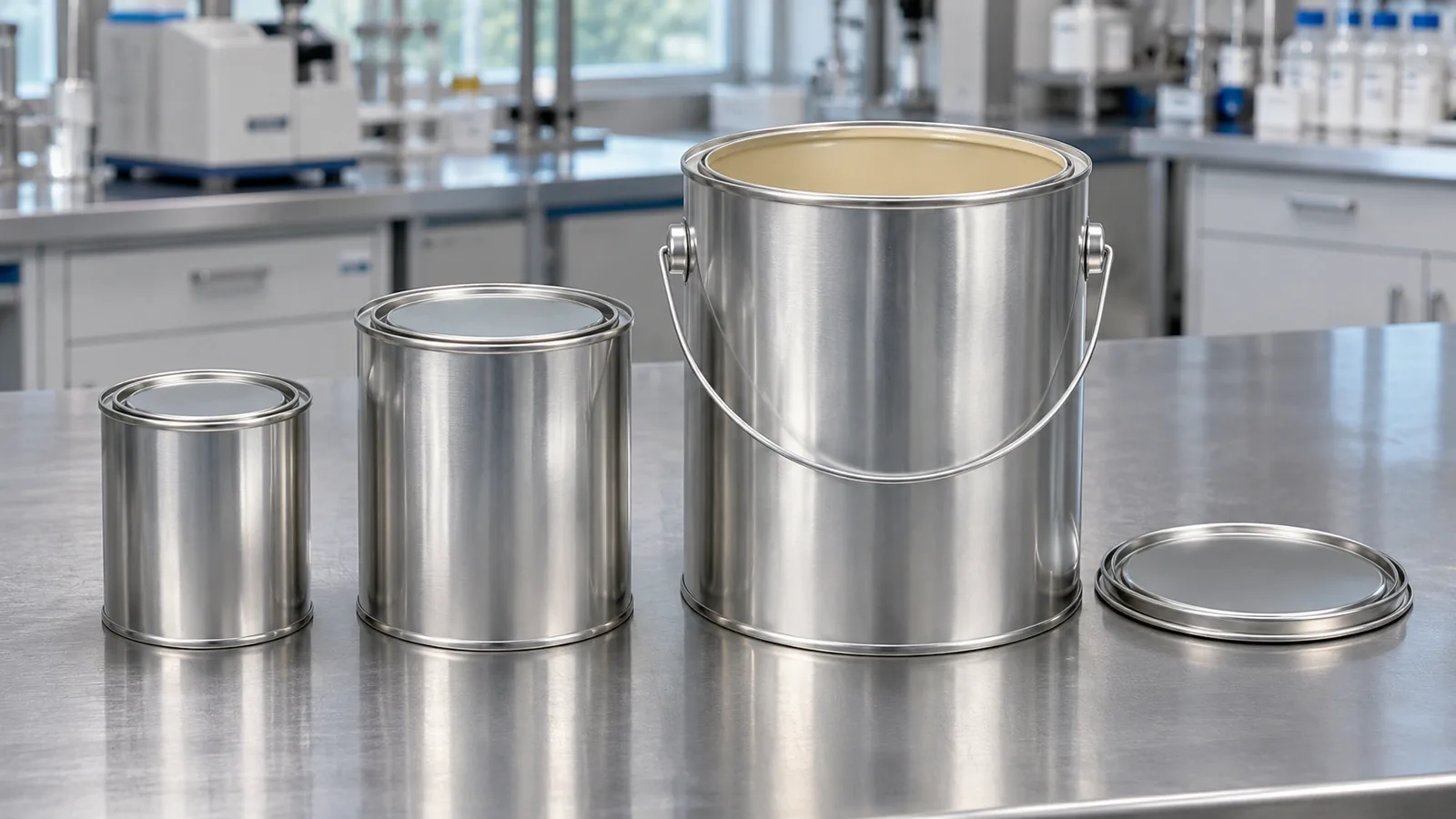
Choose a paint can by the product volume you need to package, then confirm the can’s capacity, closure, interior lining and shipping requirements together. A gallon-size designation does not replace a complete packaging specification. Mauser, for example, lists its paint can sizes by nominal capacity.
“Gallon paint cans” is a starting point for a quote, not a complete purchase specification. Inmark offers round and F-style cans, lined and unlined options, and matching closure components. Selecting the right combination means considering more than volume alone.
This guide compares common paint can sizes and example dimensions, then explains the fill, closure, compatibility and shipping checks to complete before ordering.
Common paint can sizes and dimensions
Mauser’s published metal paint can range includes sizes from quarter pint through gallon, along with additional formats such as liter and 24-ounce cans. The table below shows selected sizes and converts their dimensional codes into inches. These are manufacturer examples, not universal dimensions. Confirm the specific can drawing before planning filling-line changeovers, labels, cases or pallet layouts.
Dimensions are calculated from Mauser’s published can codes and rounded to two decimal places. Metric volumes are rounded conversions of the US liquid units, not measured brimful capacities.
How to read a paint can size code
For round metal cans, the first number identifies the nominal diameter and the second identifies the nominal height. Each uses whole inches followed by sixteenths of an inch. For example:
- 610 means 6 + 10/16 inches, or 6 5/8 inches.
- 414 means 4 + 14/16 inches, or 4 7/8 inches.
- 710.5 means 7 + 10.5/16 inches, or 7 21/32 inches.
Include the dimensional code in your specification, but also identify the supplier’s part number, lining and matching closure. Dimensions alone do not describe the complete package.
Start with net fill, not just the can name
One US gallon equals 128 US fluid ounces, or approximately 3.785 liters. That unit conversion is separate from the capacity and recommended fill of a particular gallon-size can.
Before requesting a quote, define:
- The target product volume at filling.
- Whether colorant or other ingredients will be added later.
- The filling temperature and expected storage and transportation conditions.
- The selected closure and how the product will be mixed or dispensed.
Ask the supplier to confirm the can’s actual capacity, recommended working fill and suitability for your proposed closure. Evaluate the can and closure together using a filled sample under the intended conditions. Inmark recommends checking compatibility under the planned filling, storage and shipping conditions.
For regulated hazardous liquids, headspace is also a transportation consideration. Federal requirements call for sufficient ullage, or unfilled space, to prevent leakage or permanent distortion caused by liquid expansion at temperatures likely to occur in transit.
Choosing between small and large formats
Use the size chart to build a shortlist, then evaluate each format against the way the product will be purchased and used.
Questions to work through include:
- Does the package volume fit the customer’s typical job?
- Will the product be used at once or opened and resealed?
- Does the customer need wide access for stirring or controlled pouring?
- Can the filling and closing equipment accommodate the selected dimensions?
- What changes will the format require for labels, cases and inventory?
Treat pint, quart and gallon as options rather than fixed application categories. The can’s shape, closure and product compatibility matter alongside its nominal size. Inmark’s selection guidance similarly considers the formulation, filling process, closure and shipping requirements together.
What about a 5-gallon paint can?
For a 5-gallon format, look at pails rather than simply scaling up the smaller round paint can specification. Inmark supplies plastic and steel pails with matching lids, gaskets and dispensing components.
Pails can also differ in how they open and dispense. Open-head formats provide access through a removable lid, while tight-head formats dispense through an opening such as a spout or bung. Compare those configurations against your filling process and the customer’s application method.
Explore Inmark’s pails and jerricans for larger-format options.
Not sure which can fits?
Tell us what you are packaging and we will come back with options, pricing, and lead times.
Request a quoteRound or F-style: match the opening to the application
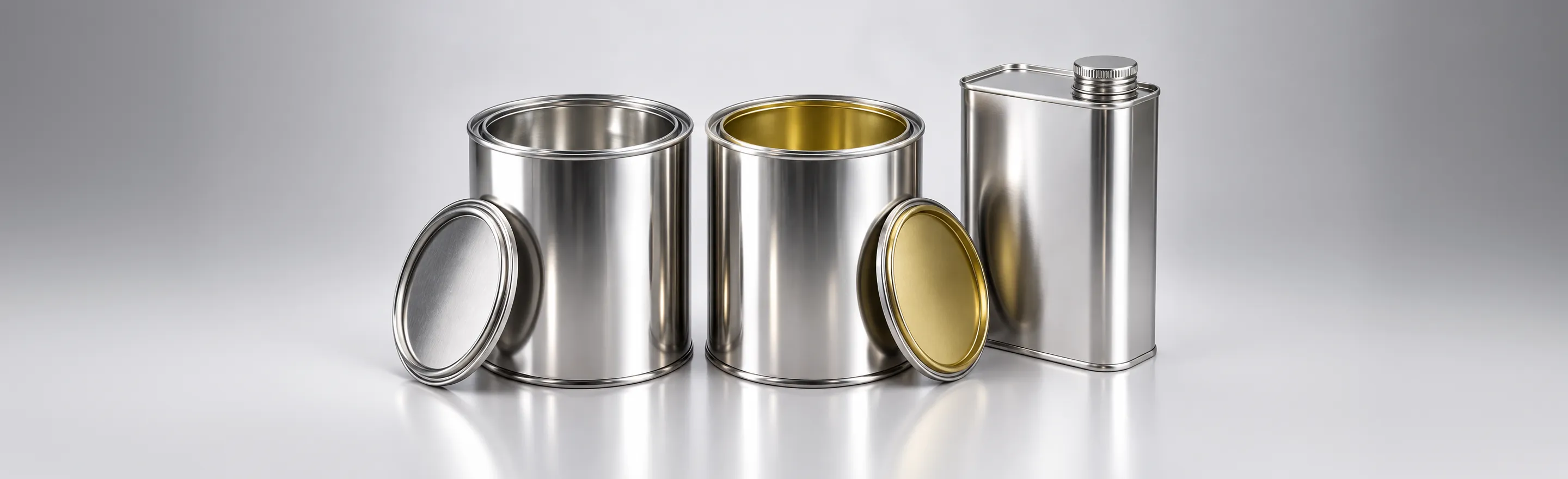
Inmark’s paint cans and steel cans include round lever-lid cans and rectangular F-style cans.
Round paint cans
Round lever-lid cans provide access for products that need to be stirred and resealed, including paints and coatings. Inmark offers lined and unlined options based on product compatibility requirements.
F-style cans
Rectangular F-style cans are available for products such as solvents, thinners and automotive chemicals. Inmark offers both plug and screw-cap closure options, so specify the opening and closure rather than assuming all F-style cans use the same configuration.
Choose the can and closure together, including any required handles, spouts or sealing components.
Match the interior lining to the formulation
The same nominal size may be available lined or unlined. That does not make the options interchangeable.
Inmark’s guide to lined and unlined steel cans explains that unlined tinplate is used for many compatible solvent- and oil-based products, while water-based products commonly require an interior lining to help protect against corrosion. The appropriate choice still depends on the actual formulation.
Evaluate the can, interior lining and closure components with your product under the intended filling, storage and shipping conditions. Compatibility testing remains the deciding factor in container selection.
If you are comparing plastic containers as an alternative, Inmark’s chemical compatibility guide can help narrow the resin options. It is a preliminary reference for plastics, not a substitute for product testing or a guide to steel-can linings.
Confirm the shipping configuration
When a coating is regulated as a hazardous material for transportation, evaluate the can as part of the complete shipping package.
Inmark’s dangerous goods packaging includes 4G and 4GV systems. For combination packaging, 4G options are based on tested configurations of inner containers and packaging components, with changes limited to permitted variations.
Before changing a can size, shape or closure, confirm whether the proposed configuration is permitted under the applicable packaging instructions. Follow the specified assembly and closure instructions rather than treating the inner can and outer carton as interchangeable components.
Provide your packaging supplier with the product’s transport classification, proposed inner containers, quantity per carton and shipping requirements. The shipper remains responsible for selecting authorized packaging and preparing it in accordance with applicable requirements.
Test the can and closure before ordering
Inmark offers round lever-lid and F-style cans, lined and unlined options, and matching plugs, lids, rings, handles and spouts. Samples are available to help evaluate fit, fill and line behavior before committing to an order. Confirm availability for the specific configuration you need.
Use the sample evaluation to check the proposed fill, closure application, opening, dispensing and resealing process. Include compatibility testing under the intended storage and shipping conditions rather than relying only on an initial fit check.
When you contact Inmark for a quote, include:
- Product type and relevant formulation details.
- Target net fill and whether ingredients will be added later.
- Preferred can style and closure.
- Filling, storage and shipping conditions.
- Estimated order quantities and annual demand by size.
- Delivery locations and any hazardous-material requirements.
Inmark’s contact team handles quotes, sample requests and compliance inquiries.
Frequently asked questions
How many fluid ounces are in a 1-gallon paint can?
One US gallon equals 128 US fluid ounces. For a gallon-size paint can, confirm the actual container capacity and recommended working fill with the supplier rather than treating the nominal size as a brimful-capacity specification.
What size is a quart paint can?
A US liquid quart equals 32 US fluid ounces, or approximately 946 mL. In Mauser’s published range, a quart can uses the code 404 × 414, equivalent to approximately 4.25 inches in diameter and 4.88 inches in height. Other products may differ, so verify the supplier drawing.
Is a 5-gallon paint can a can or a pail?
For this format, suppliers commonly use the term “pail.” Inmark offers plastic and steel pails with matching lids, gaskets and dispensing options.
Do lids and other components come with the can?
Confirm the quote. Inmark helps match the container, closure and liner, and quotes those items separately. Specify which lids, plugs, rings, handles, spouts or other components are required.
Can the same size can be used for water-based and solvent-based coatings?
Potentially, but the same nominal size does not mean the same interior specification will work. Select the lining and closure components for the actual formulation, then confirm suitability through compatibility testing.
Keep reading


Talk to a packaging specialist
Tell us what you need to ship and we will help you get it there safely and on time.