
Lined Or Unlined: Choosing The Right Steel Can
Water-based, solvent-based, or corrosive? The right interior lining protects both the can and the product inside it. Here is how to choose.
The inside matters most
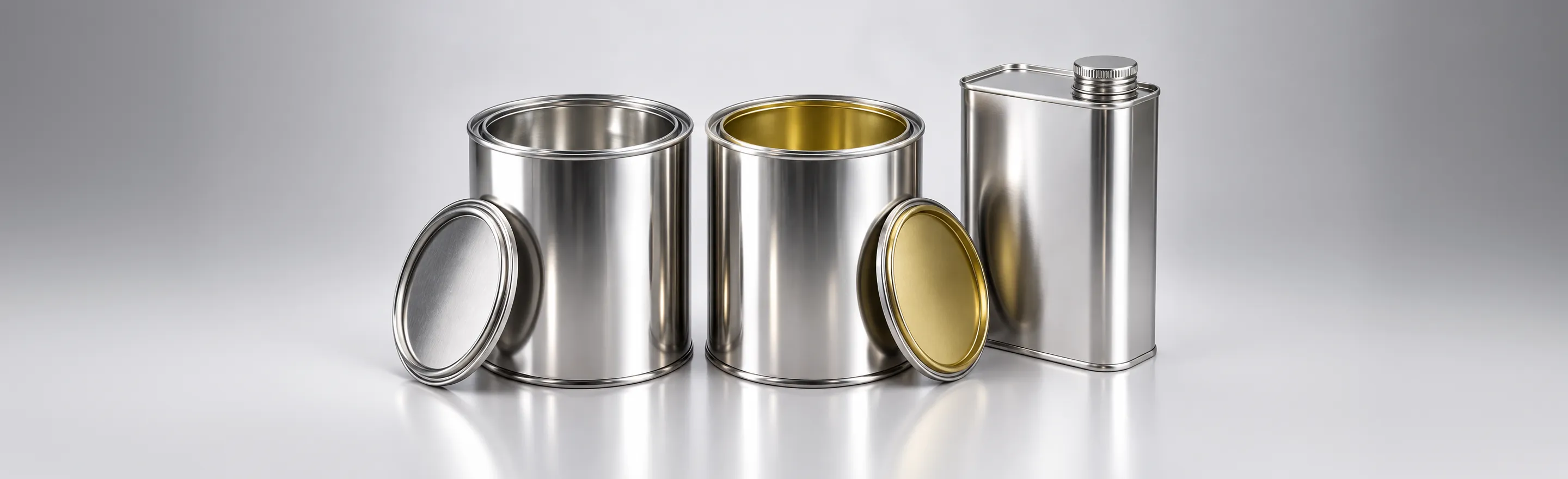
Steel cans look alike from the outside, but the inside of the can decides whether your product arrives the way it left. Choose the wrong interior and you can end up with rust, discoloration, or a product that no longer performs. The key decision is whether the can needs a lining, and which one.
When an unlined can works
Unlined cans, sometimes called plain cans, are made from bare tinplate. They are the standard choice for many solvent-based and oil-based products, such as oil-based paints, varnishes, and lacquers, which do not cause the steel to rust.
When a lining is needed
Water is the main reason to choose a lined can. Water-based and latex products can rust bare tinplate, and the rust blooms that form can contaminate the coating inside. An interior lining, most often an epoxy-phenolic coating, puts a barrier between the product and the steel. The same linings are used for many corrosive products.
Not sure which lining you need?
Tell us what you are packaging and we will come back with options, pricing, and lead times.
Request a quoteCommon can styles
- Round paint cans: friction-fit lids, ideal for paints and coatings that are opened and resealed.
- F-style cans: rectangular cans with a screw cap, common for solvents, thinners, and chemicals.
- Specialty cans: oblong and other shapes for products with specific pouring or display needs.
Test before you commit
Linings are not one size fits all. Some products, especially acidic or highly alkaline ones, need a specific coating, and the only way to be sure is to test. A short compatibility trial with your actual product can prevent a costly failure across a full production run.
Getting help
Tell the Inmark team what you are filling, whether it is water-based or solvent-based, and how it will be stored, and we will recommend the right can and lining for the job.
Keep reading

Talk to a packaging specialist
Tell us what you need to ship and we will help you get it there safely and on time.