
HDPE Vs PET Bottles: Which Plastic Fits Your Product?
Clarity, chemical resistance, barrier, and how the bottle feels in hand all depend on the resin. Here is how HDPE and PET compare, so you can choose before you choose a shape.

Resin comes first
Most plastic bottles are made from one of two resins: high-density polyethylene (HDPE) or polyethylene terephthalate (PET). They can be molded into similar shapes, but they behave very differently once your product is inside. Picking the right resin first narrows your options and avoids costly surprises later.
What HDPE does well
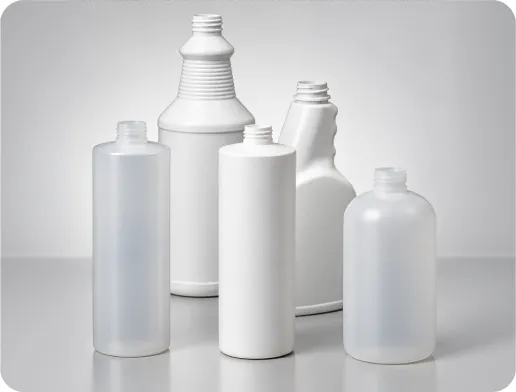
HDPE is the workhorse of industrial and household packaging. It is opaque or translucent, slightly flexible, and tough enough to survive drops that would crack other plastics. It resists a wide range of acids, alkalis, and cleaning chemicals, and it is a good barrier against moisture. You will find it holding detergents, lubricants, agricultural chemicals, and milk.
What PET does well
PET is clear, glossy, and rigid, which makes it the choice when customers need to see the product. It is lightweight, shatter resistant, and offers a much better barrier to oxygen and carbon dioxide than HDPE. That is why it is common for beverages, food, personal care, and household products where shelf appeal matters.
Not sure which bottle fits?
Tell us what you are packaging and we will come back with options, pricing, and lead times.
Request a quoteWhere each one falls short
- HDPE: limited clarity, and a weaker oxygen barrier for products that oxidize.
- PET: standard grades start to deform at around 140°F (60°C), so hot-filled products need heat-set PET. Acetone and other ketones, and strong alkalis, can attack it.
Questions to ask before you choose
- Does the customer need to see the product?
- Is the product chemically aggressive or solvent based?
- Will it be filled hot?
- Is oxygen or moisture the bigger threat to shelf life?
Getting help
Both resins are widely recycled, PET as resin code 1 and HDPE as code 2, so the decision usually comes down to performance and presentation. Fill temperature limits vary by grade, so always confirm them with your supplier before you commit. Tell the Inmark team what you are filling and how it will be sold, and we will help you narrow the right bottle, closure, and size from our stock range.
Keep reading

Talk to a packaging specialist
Tell us what you need to ship and we will help you get it there safely and on time.