How To Read A UN Packaging Marking
The string of letters and numbers on a UN-rated container tells you exactly what it is certified to carry. Here is how to decode it before you fill and ship.

A code, not a label
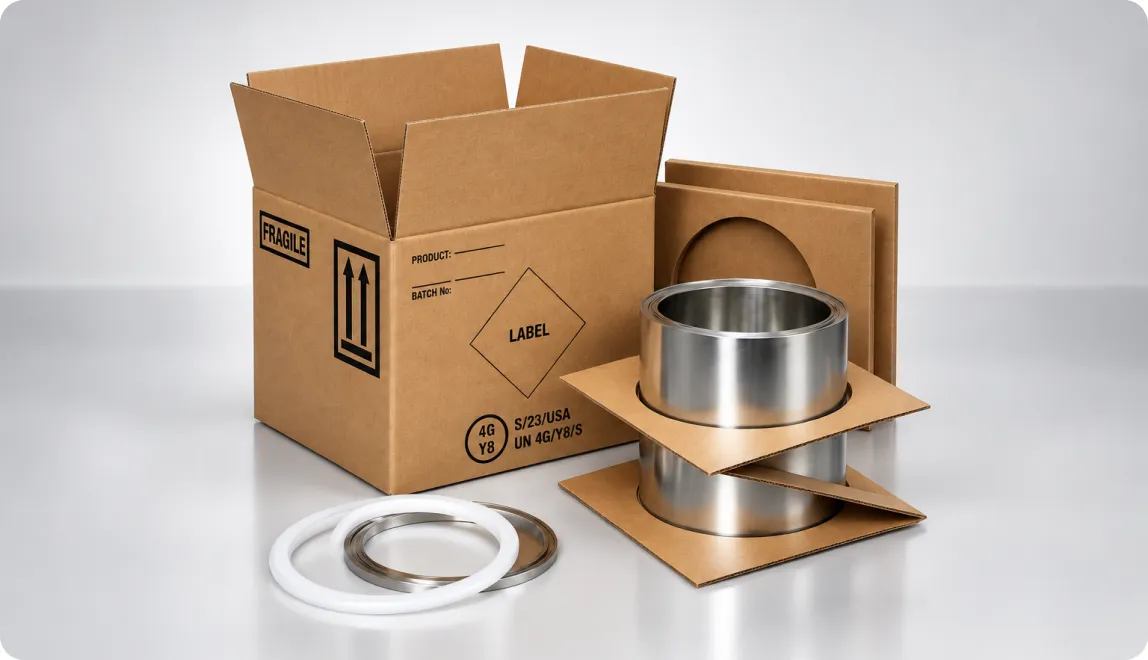
Every container approved for hazardous materials carries a UN marking. It looks like a jumble of letters and numbers, but each part of it answers a specific question about what the container was tested for. Reading it correctly is the difference between a compliant shipment and one that can be stopped, fined, or rejected.
Where the marking comes from
UN performance packaging is built and tested to the United Nations Recommendations on the Transport of Dangerous Goods. In the United States, the Pipeline and Hazardous Materials Safety Administration (PHMSA), part of the Department of Transportation, enforces them through the Hazardous Materials Regulations in 49 CFR. A container earns its marking only after passing tests such as drop, stacking, leakproofness, and hydrostatic pressure.
Reading it left to right
Take a typical marking for a plastic drum: UN 1H1/Y1.8/150/26/USA.
- UN: the UN packaging symbol, confirming the container meets UN performance standards.
- 1H1: the packaging code. The number is the type (1 is a drum, 3 is a jerrican, 4 is a box), the letter is the material (H is plastic, A is steel, G is fiberboard), and the last digit is the head (1 is a non-removable head, also called tight-head, and 2 is a removable head, also called open-head).
- Y: the packing groups it is approved for. X covers groups I, II, and III. Y covers II and III. Z covers III only.
- 1.8: the highest specific gravity of liquid it may carry. It can be left off when the rating is 1.2 or lower.
- 150: the hydrostatic test pressure, in kilopascals.
- 26/USA: the last two digits of the year of manufacture and the country that authorized the marking, followed by the name or registered symbol of the manufacturer. Plastic drums and jerricans also show the month of manufacture, often on a small dial molded into the container.
Not sure which rating you need?
Tell us what you are packaging and we will come back with options, pricing, and lead times.
Request a quoteLiquids and solids read differently
Containers tested for solids, or for inner packagings, replace the specific gravity with a maximum gross mass in kilograms, and replace the test pressure with the letter S. A marking such as UN 1H2/Y150/S describes an open-head plastic drum approved for solids weighing up to 150 kg. If your product is a liquid, a solids rating does not cover it.
Matching the marking to your product
The marking on the container has to meet or exceed what your product requires. Your Safety Data Sheet is the place to start: Section 14 usually lists the UN number and packing group, and Section 9 lists the relative density, which is the same figure as specific gravity. A container rated X can carry packing group II and III goods too, but a container rated Y or Z can never carry packing group I.
Getting help
Not sure which rating your product needs? Send the Inmark team your Safety Data Sheet and fill volume, and we will recommend UN-rated packaging that fits, with pricing and lead times.
Keep reading

Talk to a packaging specialist
Tell us what you need to ship and we will help you get it there safely and on time.